
Most people can tell you how old their car is. Ask how long they’ve had their mattress, though, and the answer is usually a shrug. Mattresses wear out slowly, and we adapt to the dips and lumps without noticing until our sleep has been suffering for years. Whether you’re planning to buy A.H. Beard mattress in Perth or just want to know if your current bed has a few good years left, it helps to know what a realistic lifespan looks like and which warning signs actually matter.
How Long Does a Mattress Typically Last?
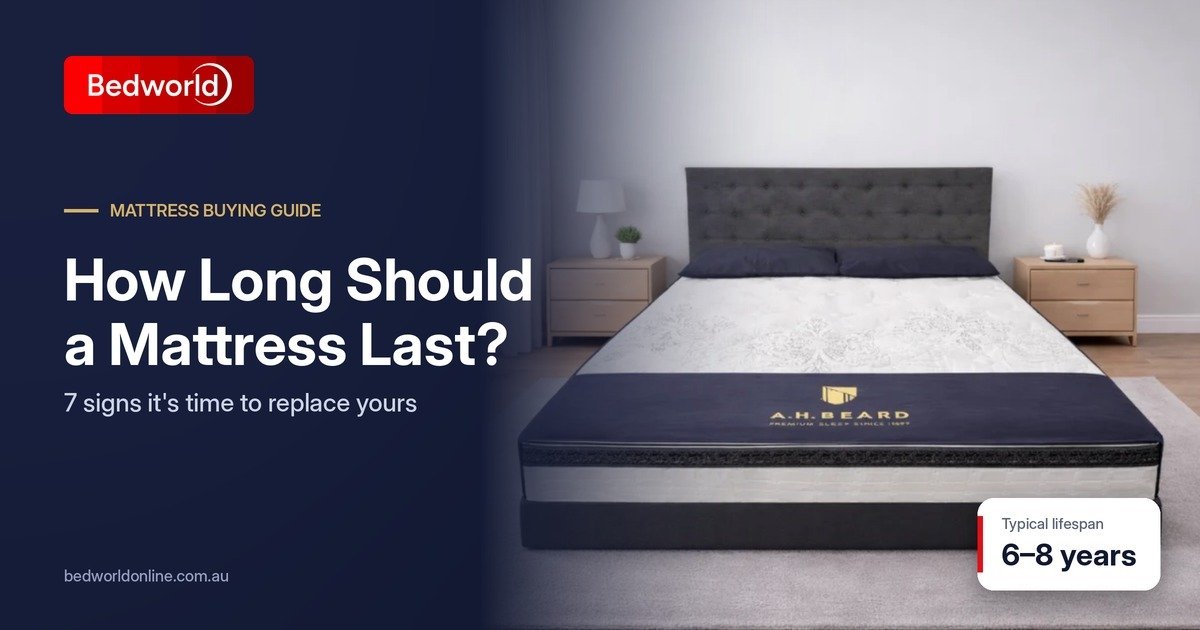
Under normal conditions, the Sleep Foundation suggests replacing a mattress every six to eight years. That’s a guideline, not an expiry date. Two mattresses bought on the same day can age very differently depending on what they’re made of and how they’re used.
Materials make the biggest difference:
- Traditional innerspring mattresses tend to sit at the shorter end of the range, as connected coils gradually lose tension.
- Pocket spring and hybrid mattresses usually hold up better, because individually wrapped coils share the load. The comfort layers on top tend to wear before the springs do.
- Memory foam lifespan depends heavily on foam density. Higher-density foams resist permanent body impressions for longer.
- Latex is generally one of the most durable materials and often stays supportive beyond the ten-year mark.
What Speeds Up (or Slows Down) Wear
A mattress shared by two adults every night works harder than one in a guest room. Body weight matters too, as heavier sleepers compress comfort layers faster. The base underneath is often overlooked: a sagging or poorly slatted base lets the mattress dip and can wear it out years early. Regular rotation and a good protector, on the other hand, can add years to its useful life.
7 Signs It’s Time to Replace Your Mattress
Age alone doesn’t tell the whole story. These signs are more reliable.
- Visible sagging or body impressions. Some settling in the first few months is normal. A dip that stays put, or a hollow where you sleep, means the support layers have broken down.
- You wake up stiff or sore. Stiffness that eases within half an hour of getting up often points to the mattress rather than your body.
- You sleep better elsewhere. If a hotel bed or a friend’s spare room gives you a noticeably better night, take that seriously.
- You can hear or feel the springs. Creaks, pings and coils you can feel through the surface are signs of a worn spring unit.
- You roll towards the middle. When two people keep drifting together, the centre has usually softened more than the edges.
- Your partner’s movements wake you more than they used to. Worn materials absorb less motion, so every turn travels across the bed.
- You can’t remember when you bought it. If it’s been more than eight years, it’s worth a closer look even if nothing feels obviously wrong.
Replace, Top Up or Claim on the Warranty?
A topper can soften a mattress that feels too firm, but it can’t fix a sag. It simply follows the dip underneath. If the mattress has lost its support, a topper only delays the decision.
Check your warranty before you replace anything. Most mattress warranties cover manufacturing faults, including impressions deeper than a stated measurement, rather than a gradual loss of comfort. Find your paperwork and measure the dip with a straight edge across the bed.
If you do need a new mattress, lie on it before you buy. Online reviews can’t tell you how a mattress feels under your own shoulders and hips. Visiting a specialist bed store in Osborne Park or a similar showroom lets you compare spring, foam and latex constructions side by side. Spend at least ten minutes in your usual sleeping position, bring your own pillow, and take your partner along if you share the bed.
How to Make Your Next Mattress Last Longer
- Use a protector from day one. It guards against sweat, spills and dust, which break down materials and can void a warranty.
- Rotate it regularly. Turning it head to foot every few months spreads the wear. Only flip it if the manufacturer says it’s double-sided.
- Match it to the right base. Follow the manufacturer’s guidance on slat spacing or ensemble bases.
- Avoid sitting on the same edge every day. Repeated pressure in one spot weakens edge support.
- Let it breathe. Pulling back the covers for a while each morning lets moisture escape.
Frequently Asked Questions
Can a mattress last 15 years or more?
Some well-made latex and high-quality spring mattresses stay usable for that long. Usable isn’t the same as supportive, though, so judge it by how you feel when you wake up rather than by the calendar.
Is it normal for a new mattress to soften?
Yes. Most mattresses soften slightly over the first few weeks as materials settle. This is different from a permanent dip that forms later.
Should I replace my base at the same time?
If the base is sagging, broken or more than about ten years old, it’s worth replacing too. An unsupportive base can shorten the life of a new mattress.
Conclusion
There’s no exact date when a mattress expires, but six to eight years is a sensible point to start paying attention. Trust the signs over the calendar: lasting dips, morning stiffness and better sleep away from home all tell you more than the purchase date. When it’s time to replace, test properly, protect the new mattress from day one and give it the right base. Those habits matter as much as the mattress you choose.