Newsletter Subscribe
Enter your email address below and subscribe to our newsletter

 ByJohn A
A stepper machine doesn’t need a dedicated home gym to earn its place in your house. Some models can sit in a corner and be put away after a workout, while larger stair-climbing machines need a much more permanent setup.
That difference is worth figuring out before you start comparing specifications and prices.
A machine can have impressive specifications and still be the wrong purchase if it leaves you squeezing between furniture every time you want to exercise. Your available floor space, workout habits and preferred type of stepping movement should all have a say in the decision.
Lets take a closer look and discover how you can choose the right machine buying guide for your space.
Get the measurements of your workout area first. The listed dimensions tell you how much floor space the equipment occupies, but they don’t tell the whole story. You’ll need some clear space around the machine to get on and off comfortably. A model with handlebars also needs vertical room, and a taller stair-climbing machine can change how the equipment fits into a smaller room.
There is another practical question: where will it go when you’re not exercising?
A compact stepper may be moved into a cupboard or another part of the room between sessions. A larger machine is usually better treated as a permanent fixture. If you already have a crowded spare room, garage or apartment, that distinction could determine which style is realistic.
Before ordering, measure the space where the machine will actually be used rather than relying on a rough estimate. You can browse the available stepper machines and compare their dimensions before deciding how much room to set aside.
The word “stepper” covers equipment with quite different designs. Mini steppers are built around simplicity and a small footprint. They can suit people who want to add short stepping sessions to their routine without dedicating a large section of the house to cardio equipment.
Full-size machines take up more room, but that extra size can bring advantages in stability and overall feel. A person planning frequent, longer workouts may prefer the more substantial platform and frame.
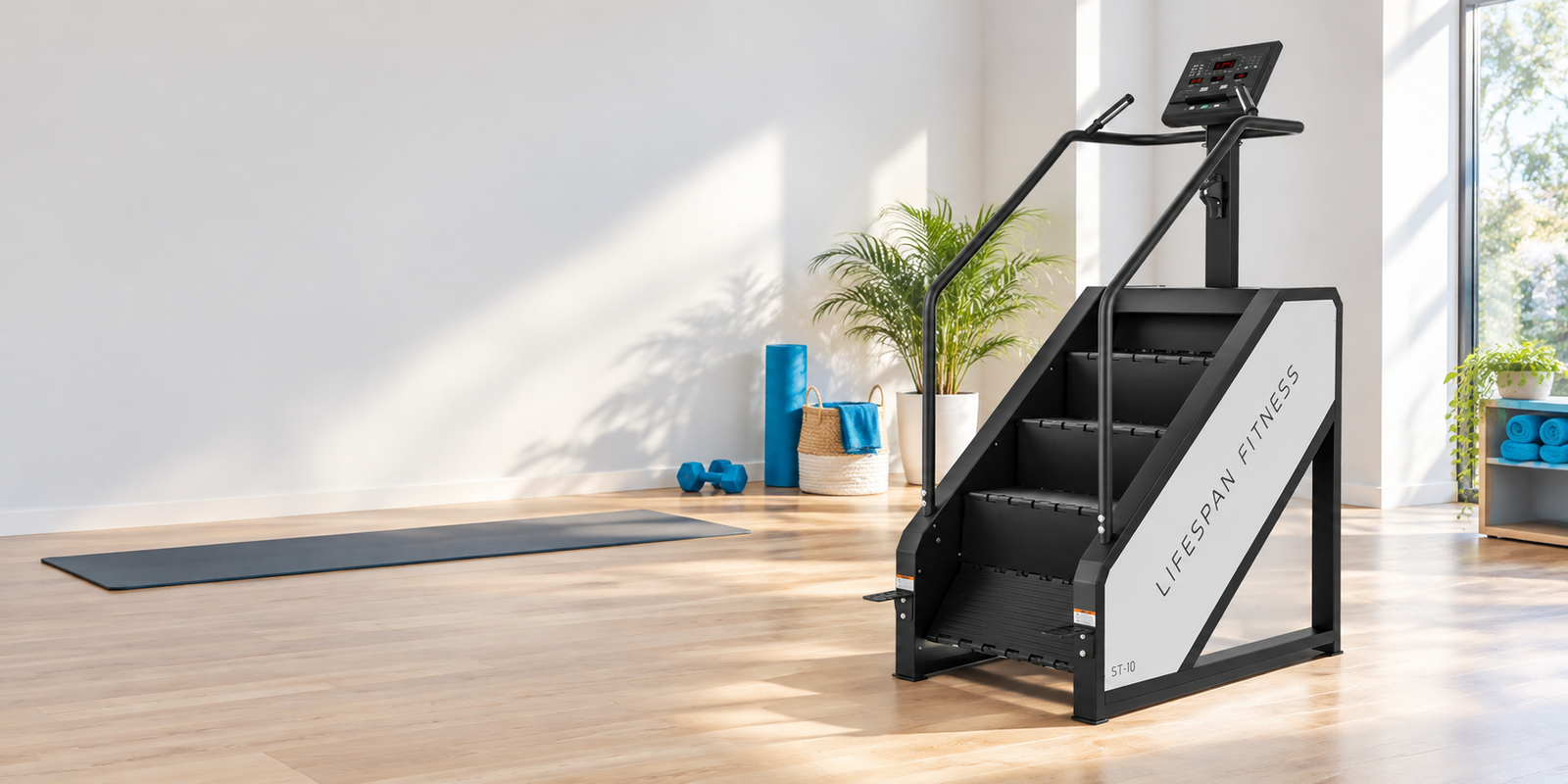
Then there are stair-climber machines. Their movement is closer to continuously climbing a flight of stairs, and the machines tend to be larger and more expensive than compact steppers.
That distinction matters when you’re comparing products that are all marketed as stepping equipment. A small machine makes little sense if you want the feel and stability of a commercial-style stair climber. Equally, buying a large machine for occasional short workouts may leave you paying for space you don’t really need.
Two machines can occupy a similar amount of floor space and still produce very different workouts. Resistance is part of that difference. Compact models may use hydraulic resistance, while other designs provide adjustable resistance or different mechanisms for controlling workout intensity. The exact setup depends on the machine, so check the specifications rather than assuming every stepper works the same way.
The movement itself deserves attention. Step height, range of motion and pedal response all influence how natural the machine feels. If the pedals return too abruptly or the movement feels unstable, the machine may become frustrating to use.
This is also where your intended workout matters. Someone looking for occasional low-impact cardio may have very different requirements from a person planning regular, demanding sessions.
Your reason for buying the machine should narrow the field considerably. Perhaps you want a convenient way to get more cardio into the week. Perhaps you’re replacing gym sessions with home workouts. Or maybe you specifically enjoy climbing-style exercise and want equipment that makes that movement the centre of the workout.
Stepping involves repeated lower-body movement while keeping the cardiovascular system working. That’s why stair-climbing equipment is often included in discussions of stair climber machine benefits, particularly cardiovascular conditioning and lower-body muscular involvement.
A compact stepper and a stair climber are not interchangeable, though. The size, movement pattern and training experience can differ considerably between them. A stepper doesn’t have to carry your entire fitness routine, either. Some people prefer combining shorter stepping sessions with strength training or another form of cardio.
A rowing machine, for instance, provides a very different movement pattern and can add variety. If you’re weighing up those options, take a look at rowers and other cardio trainers before committing all your available space to one type of equipment.
A digital display can be useful. So can adjustable resistance. Neither matters much if the machine doesn’t feel secure underneath you.
Check the stated user weight capacity and pay attention to the frame, base and pedal construction. Stability becomes particularly noticeable as workout intensity increases. If the equipment shifts, rocks or feels poorly supported during use, that is a more important concern than whether it has an extra display mode.
Build quality is especially relevant if several people will use the machine or if you expect to exercise on it regularly. In that situation, durability should be part of the purchase price calculation rather than an afterthought.
Fitness equipment can accumulate features quickly. Some stepper machines include displays for time, steps, calories or other workout information. More advanced models may offer different resistance settings, programmed workouts, heart-rate information or connectivity features.
Those extras can be useful, but they shouldn’t distract from the parts of the machine that affect every workout.
Before paying extra, ask a simple question: will this feature change how I use the machine?
If the answer is no, put your money toward something that will. Better construction, a smoother movement or a resistance system that gives you useful training options may have more practical value than a screen filled with information you never check.
There’s nothing wrong with a straightforward machine if straightforward is what you need.
For anyone comparing a stepper machine in Australia, the practical details can matter just as much as the headline specifications.
Australian homes vary considerably in size and layout, so the equipment that works beautifully in one home may be inconvenient in another.
Check the machine’s dimensions, delivery requirements and storage needs before placing an order. Measure doorways if the equipment is large or arrives assembled. Think about stairs, lifts and the route from the delivery point to its final location.
The same principle applies when shopping for fitness equipment in Melbourne. Don’t judge a machine solely by its advertised price. A cheaper model that doesn’t suit your available space or expected frequency of use isn’t necessarily economical.
Set a maximum footprint before you start browsing. It gives you a useful filter and can quickly rule out machines that were never going to work in the room.
There’s a temptation to choose equipment in isolation. Home gyms rarely work that way.
If your room also needs to accommodate dumbbells, a bench, a mat or another cardio machine, the stepper’s footprint becomes part of a much larger equation. A compact model may allow you to build a more varied setup without turning the room into an obstacle course.
For a broader look at equipment options, you can explore the range of fitness equipment and decide what deserves the space you have available.
Start with the room, but don’t stop there. The machine also needs to suit the way you expect to train. Once those two things are clear, the rest becomes easier: compare resistance systems, stability, construction, user capacity and the features that genuinely matter to your workouts.
You don’t need the biggest machine available. You don’t need the one with the longest feature list either. The useful choice is the one that fits comfortably into your space, feels appropriate for your workouts and is practical enough that you will actually use it.