Newsletter Subscribe
Enter your email address below and subscribe to our newsletter

 ByJohn A
A machine that ran perfectly for ten years can come out the other side of a move with a bent frame, a cracked bearing housing, or misaligned components that quietly cause problems for months. Heavy industrial machinery isn’t forgiving of shortcuts, and a move that looks straightforward on paper can go sideways fast without the right planning. Most businesses underestimate this until they’ve either lived through a bad move themselves or heard about one from someone who has, which is usually why they end up calling heavy equipment movers far earlier in the process than they originally planned to.
The instinct to treat a machinery move like a bigger version of a regular office relocation is understandable, but it’s the wrong frame entirely. Weight distribution, structural stress points, calibration sensitivity, and rigging requirements all come into play in ways that don’t exist when you’re just moving desks and filing cabinets. Getting this wrong doesn’t just cost money, it can take a piece of equipment out of service for weeks while repairs and recalibration happen.
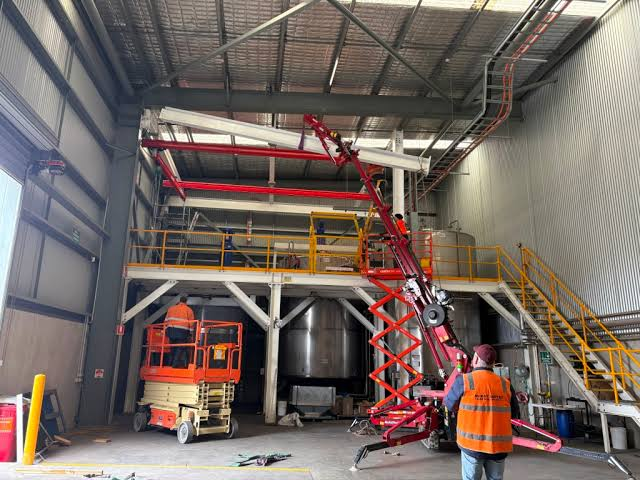
Heavy machinery doesn’t move like a solid block, even though it might look that way sitting still. Weight is rarely distributed evenly across a machine’s footprint, and understanding exactly where that weight concentrates is the difference between a controlled lift and one that shifts unexpectedly mid-move. A rigging company that hasn’t properly assessed the weight distribution beforehand is working with incomplete information, and that’s exactly when accidents happen.
Center of gravity gets even more complicated with machines that have moving parts, extended arms, or asymmetrical components. A press or a CNC machine isn’t a uniform mass, and lifting it without accounting for how its weight actually sits can cause it to tip or swing in ways that are hard to correct once it’s already in motion. This is precise work, and it’s exactly why rigging is treated as its own specialized discipline rather than something general movers are equipped to handle.
Load capacity of the equipment being used to move the machine matters just as much as the machine’s own weight. Cranes, forklifts, and rigging hardware all have rated capacities, and those ratings need real margin built in, not numbers cut close to the limit. A move planned with tight margins leaves no room for the unexpected, and something unexpected shows up more often than people assume.
Floor load capacity at both the origin and destination needs to be confirmed before a move gets scheduled, not discovered partway through. Concrete slabs have rated capacities just like racking does, and rolling several tons of machinery across a floor that wasn’t built for that load is a serious risk, especially if the machine has to pass over areas like mezzanines or elevated sections that weren’t part of the original structural design.
Doorway, hallway, and clearance measurements sound obvious, but they’re one of the most common places machinery moves run into last-minute problems. A machine that fits through a doorway by a few inches on paper can turn into a logistical nightmare on moving day if the actual clearance was measured incorrectly or if there’s an obstruction nobody accounted for, like an overhead pipe or a support beam.
Utility disconnection and reconnection requirements vary a lot depending on the equipment. Some machines need specialized electrical disconnection procedures, others involve hydraulic or pneumatic lines that need to be properly drained and sealed before the move even starts. Skipping proper disconnection procedures is one of the more common causes of damage that only becomes apparent once the machine is reconnected at the new location and doesn’t perform the way it should.
Route planning between origin and destination needs to account for more than just distance. Turning radius for oversized loads, weight restrictions on roads or bridges along the route, and permitting requirements for wide or heavy loads all factor into whether a move is straightforward or turns into a logistical project of its own. This kind of planning tends to get overlooked by businesses handling a move on their own for the first time, mostly because it’s not obvious how much regulation applies to moving something this size.
Timing coordination matters more than people expect too, especially when a machine’s downtime directly affects production. A move that isn’t properly sequenced with production schedules, staffing, and reinstallation timelines can leave equipment sitting disconnected far longer than necessary, which is lost productivity that adds up fast. This is part of why machinery relocations tend to work better when handled by a broader facility management company that can coordinate the move alongside the operational schedule, rather than treating it as an isolated logistics task disconnected from everything else happening at the facility.
Insurance and liability coverage for the move itself is worth confirming well before moving day, not after something’s already gone wrong. Equipment of this value needs coverage specific to the move, and it’s worth understanding exactly what’s covered, what isn’t, and who’s liable if damage happens during transport versus during the actual rigging and installation phases.
Getting a machine to its new location is only half the job. Reinstallation involves leveling, anchoring, and reconnecting utilities in a way that matches the machine’s original operating specifications, not just getting it roughly positioned and powered back on. Skipping careful reinstallation is how facilities end up with equipment that technically runs but performs inconsistently compared to before the move.
Calibration after a move isn’t optional for precision equipment. Even a move handled carefully can shift internal components slightly, and machines that depend on tight tolerances need to be recalibrated and tested before they go back into full production use. Skipping this step to save time almost always costs more later, either in product quality issues or in a second service call to fix problems that recalibration would have caught immediately.
Testing before returning a machine to full operation is the step that gets rushed most often, usually because everyone’s eager to get back to normal production after the disruption of a move. A short testing period that confirms the machine is actually performing to spec is worth the extra day or two it takes, especially compared to discovering a problem after it’s already running a full shift of production.
Not every mover has the specialized rigging experience or industrial equipment installation services needed for heavy machinery, and the gap between a general mover and a specialized one shows up exactly when something doesn’t go according to plan. Experience with your specific type of equipment matters, since a company that’s moved plenty of conveyor systems might not have the same familiarity with a large stamping press or a precision CNC machine.
If you’ve got a machinery move coming up, whether it’s a single piece of equipment or a full facility relocation, it’s worth having a real conversation about the specifics before anything gets scheduled. You can contact us to talk through what you’re moving, where it’s going, and what the actual logistics look like for your situation.
A machinery move that goes well is mostly invisible. Equipment gets disconnected, moved, reinstalled, and recalibrated without anyone outside the project really noticing much disruption. That kind of outcome doesn’t happen by accident, it happens because every one of these details got planned for properly instead of assumed to work itself out.