Newsletter Subscribe
Enter your email address below and subscribe to our newsletter

 ByJohn A
No breed is quite as resilient and bold as the Irish terrier. Though they stand only 18 inches tall, they have a larger-than-life heart and will go to admirable lengths to protect their loved ones. They look the part too, with a noble demeanor and alert, confident expression.
The Irish terrier is relatively rare in the US, but if you’re after a companion who will show you what loyalty is, they should certainly be on your radar. To help you understand if this canine is the right fit for your home and lifestyle, we’ll explain all you need to know in this post.
Although uncommon today, the Irish terrier is one of the oldest terrier breeds around. They originated from 19th-century Ireland and were developed to help farmers with various tasks, particularly catching vermin and guarding the farm. The American Kennel Club (AKC) officially accepted them in 1885.
While the Irish terrier may have their roots as an all-purpose farm dog, they have found themselves in a new role today: A loving family companion.
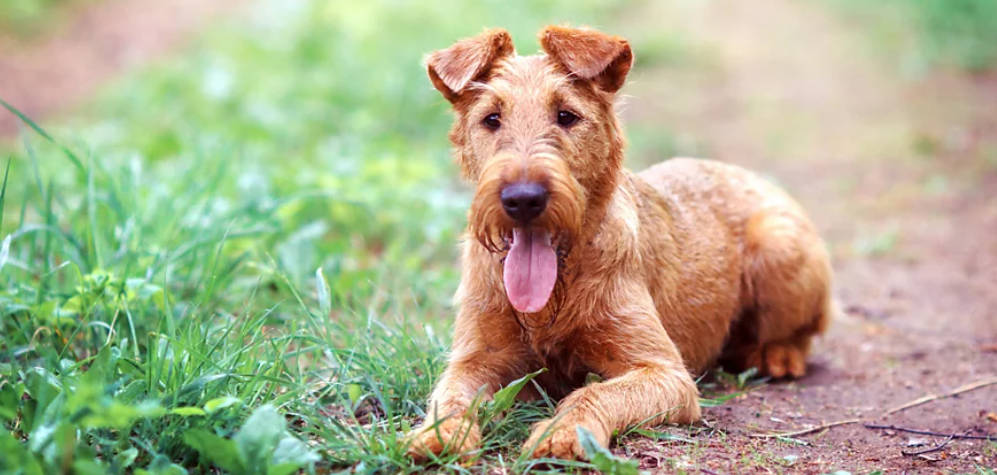
One of the most recognizable qualities of the Irish terrier is their coat. They have a tough, wiry, medium-length coat that comes in a striking fiery red or wheaten; colors that match the inner fire and bravery within them. They also have distinctive bushy eyebrows and an endearing beard of fluff.
The Irish terrier’s physique is largely a result of their farm dog roots. They have a muscular, athletic frame, a broad, powerful muzzle, and a bold expression that never wavers. Their tail is set high.
The Irish terrier stands up to 18 inches tall and weighs between 25 and 27 pounds in good health. Females tend to be smaller than males by a few pounds, but the exact size can vary depending on genetics, health, and lifestyle.
Like most working dogs, the Irish terrier is work-driven, people-oriented, and alert. They also have a bold, spirited attitude that very few breeds can match, a trait that has proudly earned them the nickname “Daredevil.”
While the Irish terrier has endless love for their owners and will do whatever they can to keep them safe, they can become overly protective at times. They will need consistent socialization and training to keep this in check.
The Irish terrier also has a strong prey drive, so if you have small pets like rabbits, you may want to consider another breed. You should also keep the Irish terrier on a secure leash in wildlife-dense areas.
Irish terriers are admirable dogs who fill their families’ lives with unconditional affection, loyalty, and reassuring security. However, like most terriers, they do have more challenging needs than certain other breeds.
The Irish terrier is energetic and should be exercised for at least an hour each day. They will appreciate activities that make use of their terrier instincts or give them a strong purpose.
Alongside daily exercise, the Irish terrier also needs an outlet for their mental energy. Training, dog sports, and interactive play all make great mentally enriching activities for the Irish terrier.
The Irish terrier is intelligent and loves to work, but they also love to follow their own instincts. They can be stubborn, so they’ll need regular training sessions and an owner who can be firm with them.
Positive reinforcement, or reward-based training, will set a stubborn Irish terrier up for success, as this approach will incentivize them effectively and keep them engaged.
A good brush twice a week with a soft-bristled brush is often all that is needed. However, to preserve that wiry texture, you will need to hand strip their fur instead of clipping their fur. A professional groomer who specializes in wiry coats can help with this.
The Irish terrier benefits from a protein-rich, high-quality diet. They should be fed their total calorie intake across two separate meals, once in the morning and again in the evening, to keep them satiated and energized.
Whichever formula you choose, make sure it’s appropriate for their life stage, size, and activity level.
The Irish terrier lives for 13 to 15 years on average, and they tend to be robust dogs. However, no breed is immune to ill health. Some common health issues seen in this breed include hyperkeratosis, cystinuria, and hip dysplasia.
Taking your Irish terrier to their routine vet checkups will help you catch serious health issues early on.
See also: Why Businesses Need a Data Loss Protection Solution
The Irish terrier is as remarkable as a family pet as they are as a working farm dog. You should adopt the Irish terrier if you’re prepared to take on the responsibility of their care. This means regular exercise, consistent training, and plenty of socialization to help them adapt.
To learn more about the Irish terrier, explore this dedicated Irish terrier guide that covers their characteristics in much greater detail. The more you know about the breed, the better idea you’ll have of whether they’re the right match.