Newsletter Subscribe
Enter your email address below and subscribe to our newsletter

 ByJohn A
Artificial flowers have become a practical and attractive option for decorating homes, offices, hospitality spaces, retail environments, and event venues. Modern designs can closely replicate the appearance of natural flowers while offering long-lasting decorative appeal. With many colours, shapes, sizes, and arrangement styles available, choosing the right display can depend on the room, purpose, interior style, and desired atmosphere.
For anyone exploring artificial flower arrangements in UK, understanding the different styles and factors involved can make it easier to select an arrangement that complements its surroundings. From simple table displays to large statement installations, artificial flowers can be adapted to a wide range of decorative requirements.
Artificial arrangements in UK offer several practical benefits for people looking to introduce floral decoration into a space.
See also: Roof Gutter Repair in Newcastle: Common Problems and How to Fix Them
Unlike fresh flowers, artificial arrangements do not wilt or lose their appearance after a few days. When properly maintained, they can remain part of an interior for an extended period. This makes them suitable for areas where consistent decoration is important.
Artificial flowers do not require watering, sunlight, soil, or regular replacement. Basic dusting and occasional cleaning can help maintain their appearance. This can make them particularly useful in busy homes, workplaces, commercial spaces, and reception areas.
Because artificial flowers do not depend on natural light or temperature, they can be positioned in many different areas. They can be displayed on shelves, tables, counters, reception desks, windowsills, sideboards, and other suitable surfaces.
The right style can influence how an arrangement looks within a room. Different designs can create different visual effects.
Traditional arrangements often feature a combination of flowers, foliage, and complementary colours. They can create a familiar and elegant appearance and may work well with classic interior designs.
These arrangements can be suitable for dining rooms, living rooms, reception areas, and formal spaces where a balanced floral display is preferred.
Minimalist arrangements usually focus on simplicity. They may use a limited number of flower types, restrained colours, and clean shapes.
This style can complement contemporary interiors where excessive decoration may distract from the overall design. A simple arrangement in a neutral vase can provide a subtle decorative feature without overwhelming the room.
Large arrangements can become a focal point within an interior. They may include tall stems, substantial foliage, and multiple flower varieties.
These displays can work particularly well in entrance areas, spacious living rooms, reception spaces, event venues, and other locations with enough room to accommodate their size.
Colour plays an important role in selecting artificial flowers. The arrangement should work with the existing colours within the room rather than appearing disconnected from them.
One approach is to select flowers that complement furniture, walls, curtains, rugs, or other decorative features. Similar shades can create a coordinated appearance, while contrasting colours can make the arrangement stand out.
Neutral tones can provide versatility. White, cream, beige, soft green, and muted shades can work across many interior styles.
These colours may be particularly suitable when the arrangement needs to remain relevant as other aspects of the décor change.
Brighter shades can introduce visual interest into a room. Rich reds, pinks, purples, yellows, and other vibrant colours can be used as accents where a stronger decorative feature is desired.
The key is to maintain balance so the arrangement complements rather than dominates the surrounding space.
Size should always be considered alongside the available space. An arrangement that looks attractive on its own may appear unsuitable if it is too large or too small for its intended location.
Small displays can work well on coffee tables, bedside tables, shelves, desks, and compact counters. They can add colour and texture without taking up excessive space.
Medium-sized displays offer greater visual impact while remaining relatively easy to position. They can be suitable for dining tables, sideboards, reception counters, and larger shelves.
Large displays require more surrounding space. They can be used to fill empty corners, decorate entrance areas, or create a prominent focal point.
Before choosing a large arrangement, consider the height, width, surrounding furniture, and movement around the area.
Different rooms and environments may benefit from different types of arrangements.
Living rooms often provide flexibility when it comes to floral decoration. A compact arrangement can be placed on a coffee table or sideboard, while a taller display can occupy an open corner.
The chosen style should complement the room’s furniture and overall decorative theme.
Dining tables can benefit from arrangements that provide visual interest without obstructing conversation. Lower displays are often practical because they allow people to see across the table.
For larger dining spaces, several smaller arrangements can also create a coordinated appearance.
Bedrooms generally benefit from softer and more understated floral designs. Light colours and delicate arrangements can contribute to a calm decorative atmosphere.
A small arrangement can be placed on a bedside table, dressing table, or shelf.
Professional environments often require polished and coordinated decoration. Artificial flower arrangements can introduce colour and natural-inspired elements while maintaining a consistent appearance.
Reception desks, waiting areas, meeting rooms, and communal spaces can all provide suitable locations for floral displays.
The container is an important part of the overall presentation. Its shape, material, size, and colour can influence how the flowers appear.
A simple container can complement a minimalist arrangement, while a more decorative vase may suit a traditional display.
The container should also be appropriately sized. A vase that is too small may make the arrangement unstable, while an oversized container can make the flowers appear visually unbalanced.
Arrangements placed in busy areas should have a stable base. This is particularly important for tall displays or locations where people frequently move around the arrangement.
Although artificial flowers require less care than fresh flowers, regular maintenance can help preserve their appearance.
Dust can accumulate on petals and leaves over time. Gentle dusting with a soft cloth, brush, or suitable cleaning method can help keep the arrangement looking fresh.
Some artificial flowers may not be designed for prolonged exposure to moisture. Keeping them in suitable indoor conditions can help protect their materials and overall appearance.
Interior layouts can change over time. Moving an arrangement to a different location can help maintain visual balance and allow the display to complement updated furniture or décor.
Several practical factors can help narrow down the options:
Taking these points into account can make the selection process more straightforward.
Balance is important when combining different flowers, foliage, colours, and textures. An arrangement with too many competing elements can appear crowded, while one with too few elements may look incomplete.
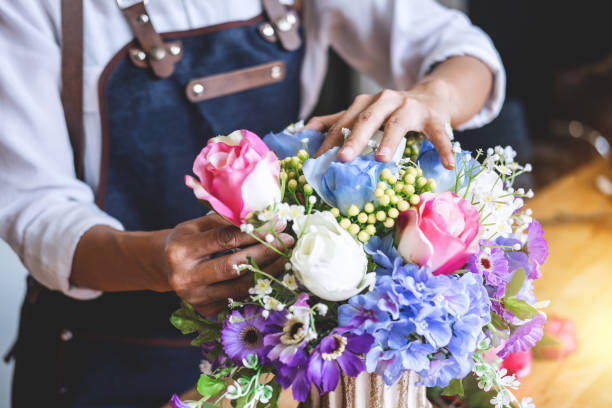
Flowers with different shapes and foliage textures can add depth. Combining larger blooms with smaller flowers and greenery can create a more natural-looking composition.
The height and width of the flowers should work with the container and surrounding furniture. A balanced arrangement should feel appropriately scaled rather than excessively large or small.
Think about where people will see the arrangement from. A table display may need to look attractive from several directions, while a display positioned against a wall may be designed primarily for a front-facing view.
Choosing artificial flower arrangements in UK involves considering style, colour, size, placement, interior design, and maintenance requirements. Whether the goal is to create a subtle decorative feature or a striking focal point, the right arrangement can complement a space and provide lasting visual appeal.
Exploring different designs, colours, flower types, containers, and sizes makes it possible to find an option suited to individual surroundings. A thoughtfully selected flower range can provide the flexibility needed to create attractive floral displays for different rooms, occasions, and interior styles.