Newsletter Subscribe
Enter your email address below and subscribe to our newsletter

 ByJohn A
Choosing the right insulation is about more than comfort it is a critical decision for fire safety and acoustic performance in any building. This guide explains how different insulation materials balance fire resistance with soundproofing, helping you select solutions that protect lives while reducing noise.
Fire safety is a primary consideration when selecting insulation materials for residential, commercial, or industrial buildings. Flame resistance determines how a material behaves when exposed to heat and whether it contributes to fire spread.
Insulation materials are tested according to standards such as ASTM E-84, which measures surface burning characteristics and assigns a flame-spread rating. Materials with a flame-spread rating of 25 or less meet Class A fire-resistance requirements, making them suitable for most construction applications.
Not all insulation types offer equal fire protection. Some materials are naturally noncombustible, while others rely on chemical treatments to achieve fire-retardant properties. Understanding these differences is essential for making informed decisions that prioritize safety.
Fiberglass and mineral wool (including stone wool) stand out as the most fire-resistant insulation options available. These materials are naturally noncombustible and maintain their fire-resistant properties throughout their lifespan without requiring additional chemical treatments.
Mineral wool, particularly stone wool products like ROCKWOOL Safe’n’Sound, offers exceptional fire resistance. Stone wool does not burn, produces no toxic smoke when exposed to fire, and helps contain flames from spreading through wall cavities, floors, and ceilings.
Unfaced fiberglass and mineral wool are even accepted as fire blocks in wood-frame construction, demonstrating their effectiveness in passive fire protection systems. However, it is important to note that some facings such as kraft paper or foil are combustible and should never be left exposed without a code-approved thermal barrier.
Cellulose insulation, made primarily from recycled newspaper, presents different fire safety considerations. Although it is heavily treated with fire-retardant chemicals before installation, cellulose remains a recognized fire hazard according to the Consumer Product Safety Commission because its base material is highly combustible.
Spray foam insulation ignites at approximately 700°F and is classified as combustible. All foam-based insulations require a code-approved thermal barrier—typically half-inch drywall—to be installed over them to meet fire safety codes.
While these materials offer excellent thermal performance and air-sealing capabilities, their fire risk means they must be installed with proper protective measures and should not be used in applications where fire resistance is the top priority without adequate barriers.
Soundproofing effectiveness varies significantly among insulation materials, and the best acoustic performance does not always align with the highest fire resistance. Mineral wool and fiberglass provide good sound absorption and are widely used in interior partitions, but they may not fully soundproof an area on their own.
Stone wool batts designed for fire and sound, such as ROCKWOOL Safe’n’Sound, deliver superior acoustic performance in wood and steel frame construction. These products are engineered specifically for interior walls, floors, and ceilings where both fire resistance and noise reduction are required.
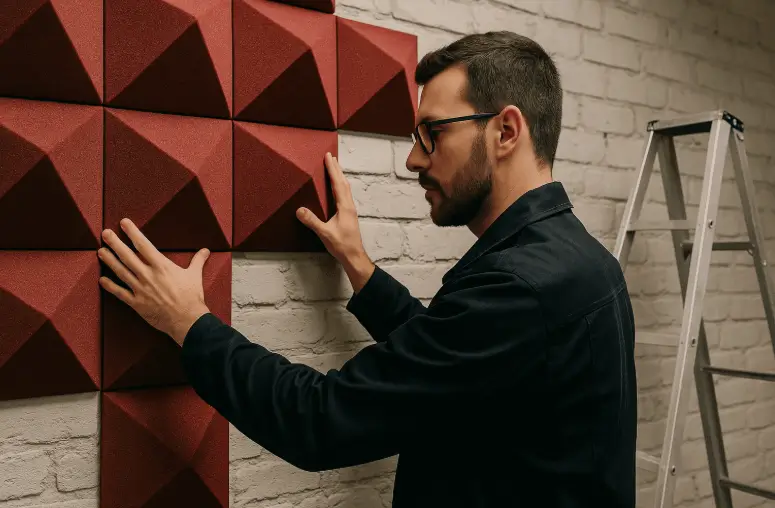
For maximum soundproofing, additional acoustic solutions such as acoustic panels, resilient channels, or mass-loaded vinyl may be necessary alongside insulation. The key is to layer materials strategically to address both airborne and structure-borne noise while maintaining fire safety standards.
Fire-resistant sound absorbing materials combine acoustic performance with fire safety, making them ideal for commercial buildings, schools, hospitals, and high-occupancy spaces. These products are designed with cores that withstand high heat and slow the rate of fire spread.
Materials are classified by fire resistance into Class A, Class B, and Class C ratings. Class A materials offer the highest resistance, withstanding flames and heat for at least one to two hours. Non-combustible materials such as concrete, steel, and gypsum fall into this category and are commonly used in commercial and high-rise construction.
Class B materials provide moderate resistance for up to one hour and include wood treated with fire retardants and certain asphalt products. Class C materials offer the lowest resistance and include untreated wood and some plastics, suitable only for low-risk areas. Selecting the appropriate class depends on building codes and occupancy requirements.
See also: Complete Digital Marketing Agency Services for Businesses
When choosing insulation, consider both fire safety and acoustic goals alongside thermal performance, budget, and local building codes. For projects where fire safety is the top priority, mineral wool and unfaced fiberglass are the only truly non-combustible options and should be your first choice.
If soundproofing is equally important, look for products specifically engineered for both fire resistance and acoustic performance, such as stone wool batts rated for interior partitions. Ensure all facings, adhesives, and sealants also meet appropriate fire ratings for your system.
Always confirm that test certificates are available to meet local fire regulations, particularly for marine, commercial, or high-rise applications. Proper installation including sealing wall penetrations and gaps with fire-rated materials is just as critical as material selection for achieving desired safety and performance outcomes.
Balancing fire safety with soundproofing requires careful selection of insulation materials that meet both safety codes and acoustic needs. Noncombustible options like mineral wool and fiberglass offer the best fire protection while providing solid sound absorption, whereas cellulose and spray foam require additional fire barriers despite their thermal advantages. By understanding fire ratings, material properties, and installation requirements, builders and homeowners can create safer, quieter spaces that comply with regulations and deliver long-term performance.