Newsletter Subscribe
Enter your email address below and subscribe to our newsletter

 ByJohn A
Industrial machinery often contains areas where air, gas, steam, dust, or other materials can move through small gaps between components. Controlling these leakage paths helps equipment operate efficiently and reduces unwanted movement of fluids or contaminants. Sealing methods vary according to the machinery, operating conditions, temperature, pressure, and movement involved.
Brush seals are one method used to control leakage around rotating and moving components. Their flexible construction allows them to accommodate small changes in position while maintaining a close sealing interface. They are found in equipment such as turbines, compressors, pumps, generators, and other industrial systems where conventional rigid sealing arrangements may have limitations.
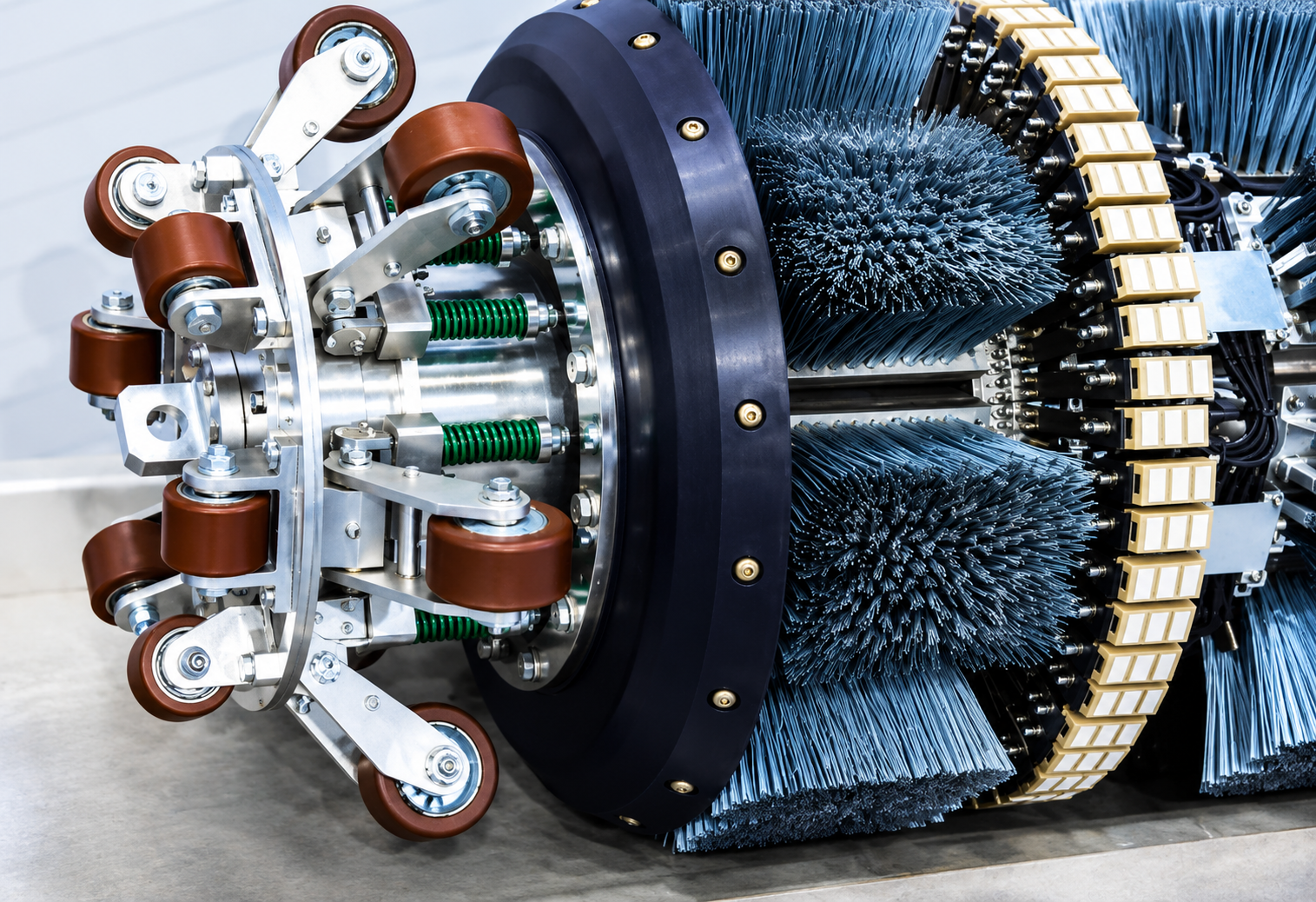
A brush seal consists of many fine, flexible bristles held within a metal carrier or backing structure. The bristles are generally arranged at an angle rather than standing straight against the surface being sealed. This arrangement creates a dense barrier while allowing the individual bristles to flex as the equipment operates.
The bristles may be manufactured from metallic materials selected for the temperature, pressure, speed, and chemical conditions of the application. The carrier holds the bristle pack in position and provides the mechanical structure needed for installation.
Unlike a rigid component that depends on maintaining an exact fixed position, the flexible bristle arrangement can accommodate limited movement. This characteristic is useful around rotating shafts and other components where dimensional changes can occur during operation.
The design also affects the amount of leakage that can pass through the seal. Bristle density, orientation, length, stiffness, and installation clearance all influence the final sealing characteristics.
See also: How to Maintain Artificial Flowers for Office Spaces Looking Fresh and Elegant
The primary purpose of a brush seal is to restrict the path available for unwanted fluid movement. The closely packed bristles create a narrow, complex route through which gas or air must travel.
As pressure builds on one side of the seal, the bristles respond to the pressure difference while remaining supported by the carrier. The resulting structure limits direct flow through the gap.
The bristles can also accommodate small radial or axial movements. This is particularly useful in rotating machinery, where shafts may experience minor changes caused by thermal expansion, vibration, manufacturing tolerances, or operating loads.
Operating conditions still need to be considered carefully. Excessive bristle contact can increase wear, while an overly large gap can increase leakage. The correct balance depends on the machinery and its intended operating range.
Not every sealing application involves a rotating shaft. Machinery also contains joints and interfaces between fixed components that require controlled sealing.
Stationary parts sealing may be required around casings, housings, partitions, ducts, access points, and other fixed interfaces. In these applications, the design focus can differ from that of a rotating seal because relative motion may be limited or absent.
The sealing arrangement must account for the geometry of the components and the conditions expected during operation. Temperature changes can cause components to expand or contract, potentially altering the original gap.
Installation accuracy also matters. An incorrectly positioned seal can create uneven gaps, excessive compression, or exposed areas through which fluid can escape. Proper support and alignment help maintain consistent sealing performance over the service period.
For equipment subjected to frequent maintenance, accessibility is another practical consideration. A sealing arrangement that can be inspected and replaced without extensive equipment disassembly may reduce maintenance requirements.
Clearance is one of the main variables affecting leakage in industrial sealing systems. As the open path between components becomes larger, more fluid can generally pass through it. Reducing unnecessary clearance can therefore help limit leakage.
Seal clearance reductions need to be designed carefully rather than simply making the gap as small as possible. Machinery components can move during operation, and thermal expansion can change their dimensions. A clearance that appears acceptable while equipment is cold and stationary may become unsuitable at operating temperature.
A very small clearance can also increase the possibility of unwanted contact. Depending on the equipment, this may contribute to wear, friction, heat generation, or damage to the sealing elements.
Engineers therefore consider operating speed, shaft movement, temperature, pressure, component tolerances, and expected wear when establishing the appropriate clearance. The objective is to restrict leakage while maintaining sufficient tolerance for normal equipment movement.
Different sealing technologies address leakage in different ways. Honeycomb seals use a structured cellular surface that creates a controlled flow path and can be used in various turbomachinery applications.
A brush-based arrangement relies on flexible bristles, while a honeycomb design uses a patterned surface structure. Their mechanical behavior, leakage characteristics, installation requirements, and response to component movement can therefore differ.
The choice depends on the equipment and operating conditions. Factors such as rotational speed, pressure differential, temperature, available space, expected movement, and maintenance requirements can influence the appropriate design.
A sealing system may also incorporate more than one type of sealing element. The final arrangement depends on the geometry and performance requirements of the machinery rather than on the name of the sealing technology alone.
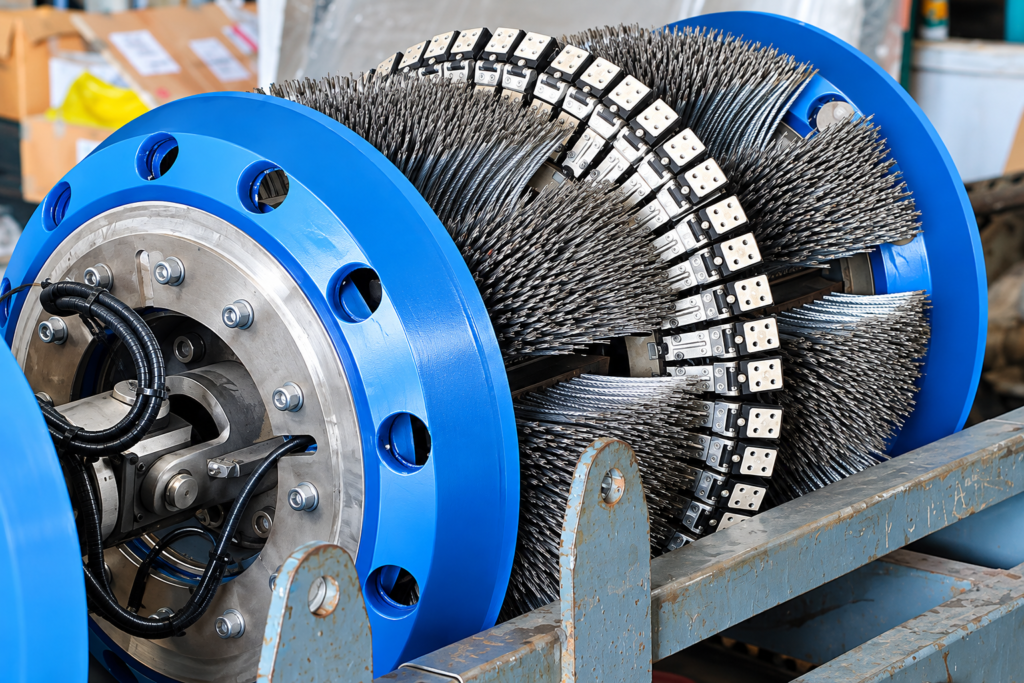
Cloth side seals are another type of sealing component used in certain industrial applications. They commonly provide a barrier alongside areas where material, dust, air, or other substances could move through an unwanted opening.
Their construction and flexibility make them suitable for applications where a rigid sealing element may not be practical. The actual material selection depends on factors such as temperature, abrasion, chemical exposure, and the type of material being contained.
As with other sealing systems, correct positioning and appropriate compression are necessary for reliable operation. The seal must remain sufficiently close to the relevant surface without creating unnecessary resistance or premature wear.
Selecting a sealing arrangement requires more than identifying the size of the gap. The surrounding operating environment can have a significant effect on performance.
Temperature is one consideration. Materials need to retain their required mechanical properties within the expected operating range. High-temperature equipment may require specialized metallic materials or other heat-resistant constructions.
Pressure differential also affects sealing behavior. A seal operating under a substantial pressure difference may require a different arrangement from one used in a low-pressure application.
Movement should be evaluated as well. Rotational movement, axial displacement, vibration, thermal growth, and equipment tolerances can all affect the relationship between the seal and the adjacent component.
Material compatibility is another consideration. Exposure to chemicals, moisture, abrasive particles, or corrosive environments can influence service life.
Finally, installation and maintenance should be considered during the design stage. Correct dimensions, alignment, support, and positioning help the sealing element perform as intended. Periodic inspection can also identify wear or changes in operating conditions before they develop into larger equipment problems.
There is no single sealing arrangement that fits every industrial machine. A component working at high temperature and speed may have very different requirements from equipment operating at low pressure with minimal movement.
The most suitable design depends on the leakage path, surrounding components, operating conditions, allowable clearance, maintenance requirements, and expected service life. Understanding these variables allows engineers to select a sealing arrangement based on actual equipment requirements rather than relying on a standard configuration.
Properly designed sealing systems can help control leakage while accommodating the movement and dimensional changes that occur during normal machinery operation. That balance between leakage control, clearance, flexibility, and durability is central to effective industrial sealing design.